


November 10, 2026 – The Elections Are Over – Now What?
0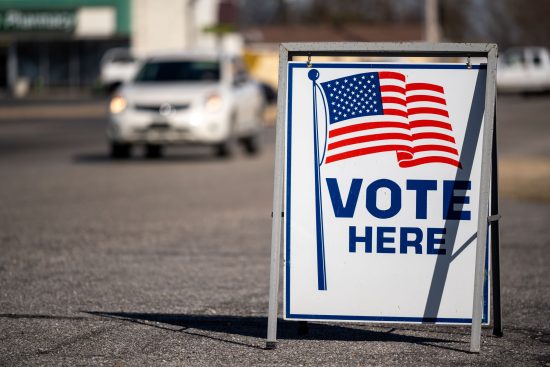
Economic Commentary
There are few times in a year when the monthly jobs report takes a back seat to additional news affecting the markets. Last week was one of those times as all eyes were on the results of the mid-term elections. Not that the employment report was not important. In October, the economy added 165,000 jobs. In addition, the previous two months of “job gains” were revised upward by 84,000 jobs. We had the phrase “job gains” in parenthesis because lately, not every month is a month of job gains. There have been losses. The headline unemployment rate fell one tick to 4.1%. In addition, wages rose 0.4% monthly and 3.1% on a year-over-year basis.
Overall, this report was seen as stronger than expected. Note that there will be one more jobs report released before the Federal Reserve meets again in December. Meanwhile, Election Day was very incisive with regard to the results. The electorate was ready for a change. The next question that follows is what type of change might we see? Immediately we do not expect any changes as the new Congress is not sworn in until January. Do we expect the political infighting to stop? No. Do we hope that bipartisan compromises can be found? We do hope so, but we must temper our enthusiasm in this regard. We are certainly not going to witness a love fest.
There is one area in which movement is expected. The only problem is we don’t know which direction that movement will take us. That is in the Middle East. It has been assumed for weeks that there would be more activity within the conflict after Election Day. Only that activity could be heightened fighting or it could be more intense peace talks. In reality, we could see a modicum of both. Obviously, time will tell. It would certainly help if we could start the new Congress in January with the Middle East conflict on its way to being resolved. That way our representatives can focus on the many issues confronting our country domestically. Such as higher interest rates.
Weekly Interest Rate Overview
The Markets. Mortgage rates eased for the third straight week as the markets digested the election news. Generally, the stock and bond markets reacted with a lot of volatility to the results of the election. Oil prices fell as well, as the markets are betting on a faster resolution for the Iran conflict before the new Congress is in place. According to the Freddie Mac weekly survey, 30-year fixed rates fell to 7.18% last week from 7.24% the previous week. In addition, 15-year rates decreased to 6.57%. A year ago, 30-year fixed rates averaged 6.22%, slightly less than 1.0% lower than today. Note: Rates indicated do not include fees and points and are provided for evidence of trends only. They should not be used for comparison purposes.
Real Estate News
The share of small-scale real estate investors actively buying residential properties posted a 15-year high in the first half of 2026, Realtor.com reported. Underscoring shifting investor activity amid recent regulatory and market-driven pressures, the home listings platform said investors of all sizes accounted for about 10.7% of all sales throughout the first six months of the year, “close to their share in recent years” and down from 11% in the first half of 2025. Despite maintaining purchase share, the volume of investor purchases declined to its lowest level for the first six months of any year since 2020 as economic pressures mounted following the start of the Iran war in late February. Investors bought roughly 224,000 residential homes from January through the end of June, about 7% lower than a year ago. “Investor purchases fell faster than non-investor purchases, though both eased compared to the first half of 2025,” said Realtor.com Senior Economist Hannah Jones, who authored the report. Reporting from investor-focused data platform BatchData suggests investor purchases may have been considerably higher than the Realtor.com tally, however. BatchData says investor purchase share was about 27% in the second quarter, totaling about 284,000 second-quarter purchases on the heels of 277,000 in the first quarter. To avoid interest costs, closing risks and other frictions that accompany financed purchases, investors often make all-cash offers that sellers find appealing, too. The all-cash share among investor purchases in the first half of 2026 was 55%, compared to recent peaks around 68% in 2021 and 2022, Realtor.com noted. Source: Scotsman Guide
More than half of real estate agents surveyed by HomeLight said fewer or more favorable contingencies are the most common reason they would advise a seller to accept an offer below the highest bid. Another 20% pointed to a financially stronger buyer. Just 5% said they rarely recommend accepting anything other than the highest-priced offer. For loan originators competing for purchase business — and the real estate agent relationships that come with it — the findings offer a useful look at the other side of the transaction: what real estate agents are paying attention to when evaluating whether a financed buyer can actually get to closing. When HomeLight asked real estate agents what would make them hesitant to recommend an offer, uncertain financing came up repeatedly, along with numerous contingencies, low earnest money, and offers dependent on the sale of another home. “Price gets everyone’s attention, but I’m looking much deeper than price,” Cleveland real estate agent Toni Noday-Krager said. “How strong is the financing? Is the preapproval solid?” That flexibility is showing up elsewhere in the market. Seller concessions reached a record spring high, appearing in 46.2% of May home sales. When affordability is the buyer’s primary obstacle, 38% of surveyed agents said a seller credit toward closing costs is the most effective strategy for generating an offer. That edged out reducing the sales price at 31%, while 18% favored a mortgage rate buydown. The preferred strategy varies by market. Closing-cost credits were more commonly recommended in the South, while agents in the Northeast and Mountain regions were more likely to favor a price reduction. Source: National Mortgage Professional
A global study by The Nature Conservancy across nearly 8,900 cities reveals that urban tree cover mitigates 41% to 49% of the urban heat island effect. Trees cool summer air temperatures locally by an average of 0.15°C (with drops up to 2.7°C), benefiting over 900 million people, though cooling benefits remain unequal across neighborhoods. Key Findings on Urban Climate and Heat include the fact that trees offset nearly half of the extra heat accumulated in densely built urban environments compared to nearby rural areas. In addition, advanced metrics analyzing humidity and radiation show that trees can reduce actual human heat stress significantly more than basic air temperature readings indicate. The strongest cooling benefits are heavily concentrated in wealthier areas and suburban zones, while denser, lower-income neighborhoods frequently face higher local temperatures and suffer from significantly less tree canopy coverage. Source: The Nature Conservancy
